Understand an instruction
Separate stitch names from repeat counts before working the next row.
Read a pattern Check US/UK termsThe field notes
From choosing your first project to finishing a blanket: 19 guides and worked cases with visual explanations, useful checks and links to the matching tools.
Separate stitch names from repeat counts before working the next row.
Read a pattern Check US/UK termsMeasure your fabric, then decide whether the rounded result fits the space.
Measure gauge Try a size limitIdentify the supply unit before splitting consumption between colours.
Read the label Budget by colourCompare the expected count and measurements, then keep a clear restart point.
Check uneven edges Record the next step
Getting started
Decode repeats, stitch counts and turning instructions with a small worked example and a pre-project reading routine.
Read the field note ↗
Getting started
Compare simple project types by counting, shaping, finishing and measurement demands before choosing a pattern.
Read the field note ↗
Getting started
Use metric size, a small comparison swatch and fabric feel to choose a hook without relying on the label alone.
Read the field note ↗
Getting started
Decode a sample yarn label, separate product identity from measurements and spot missing details before buying another ball.
Read the field note ↗
Getting started
Use a care-compatible sample to compare before-and-after dimensions and avoid planning from unfinished fabric.
Read the field note ↗Getting started
Separate changing stitch counts from gauge drift and edge conventions before changing your hook or adding a border.
Read the field note ↗Gauge & sizing
Measure stitches and rows accurately, keep units consistent and use your sample to plan a project that fits.
Read the field note ↗Gauge & sizing
Understand repeats plus edge stitches, choose a valid stitch count and avoid confusing working stitches with foundation chains.
Read the field note ↗
Yarn & materials
Use the area and weight of a real swatch to estimate blanket yarn, then account for joins, borders and whole balls.
Read the field note ↗
Yarn & materials
Separate thickness categories from grams, then use a known yarn label and a kitchen-scale reading to estimate leftover metres.
Read the field note ↗
Yarn & materials
Compare three invented yarn labels, round purchases correctly and use a swatch decision table before choosing a substitute.
Read the field note ↗
Layout & colour
Calculate rows and columns from finished square size, with worked examples for joins and borders.
Read the field note ↗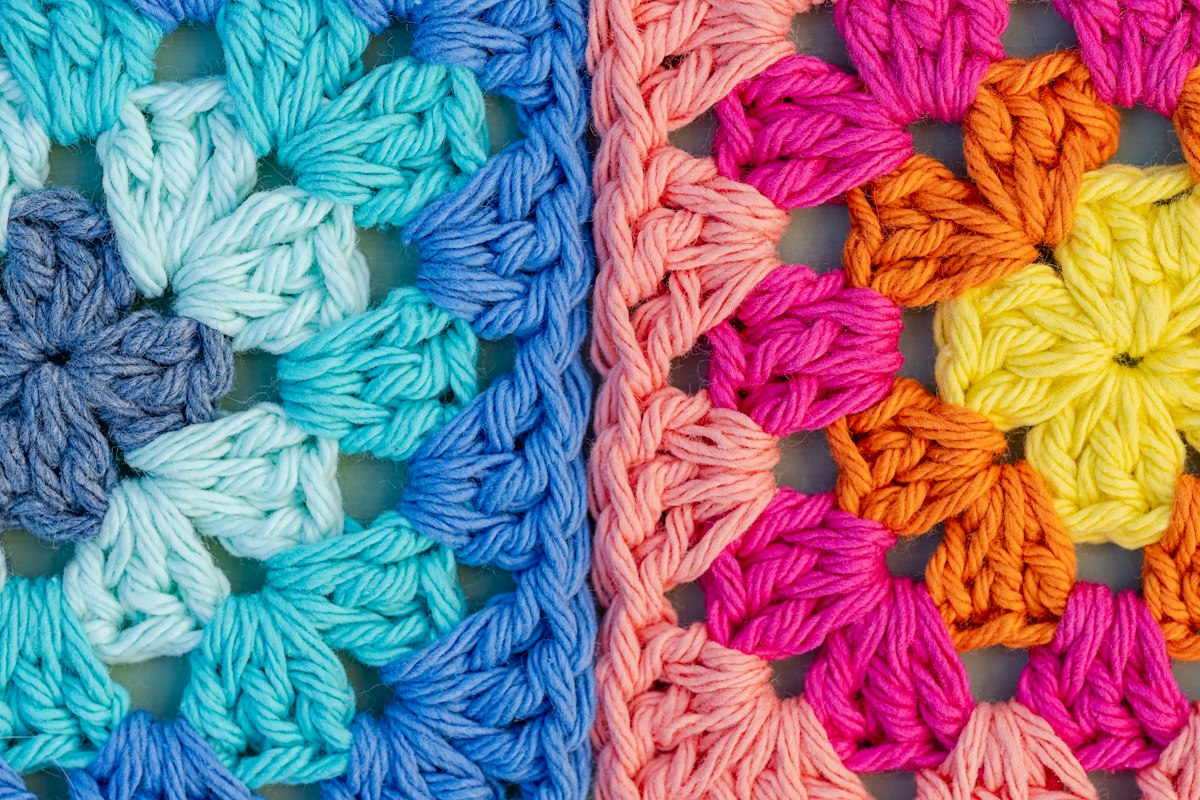
Layout & colour
Separate added dimensions from yarn consumption, count internal seam lengths and estimate a border without double-counting the corners.
Read the field note ↗
Layout & colour
Try a simple visual layout, count motifs by colour and turn a screen palette into a usable yarn plan.
Read the field note ↗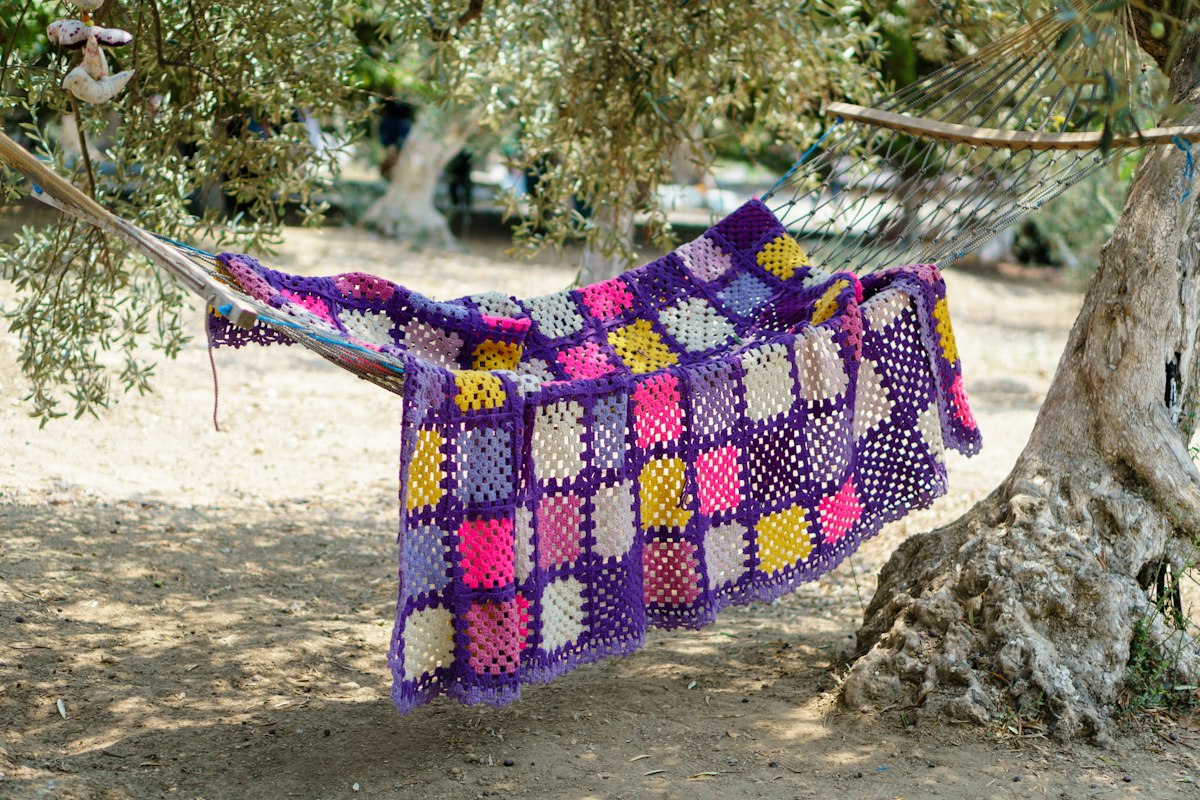
Planning lab
Compare nearest-size and maximum-size layouts, see how border changes affect both sides, and leave room for real measurement variation.
Read the field note ↗Planning lab
Count a 35-motif row layout, allocate joining and border yarn, and see why rounding the pooled total can underbuy individual colours.
Read the field note ↗Planning lab
Work backwards from a fixed yarn supply, reserve yarn for other components and round the length down to a complete row repeat.
Read the field note ↗